
Describe the recovered-fibre range
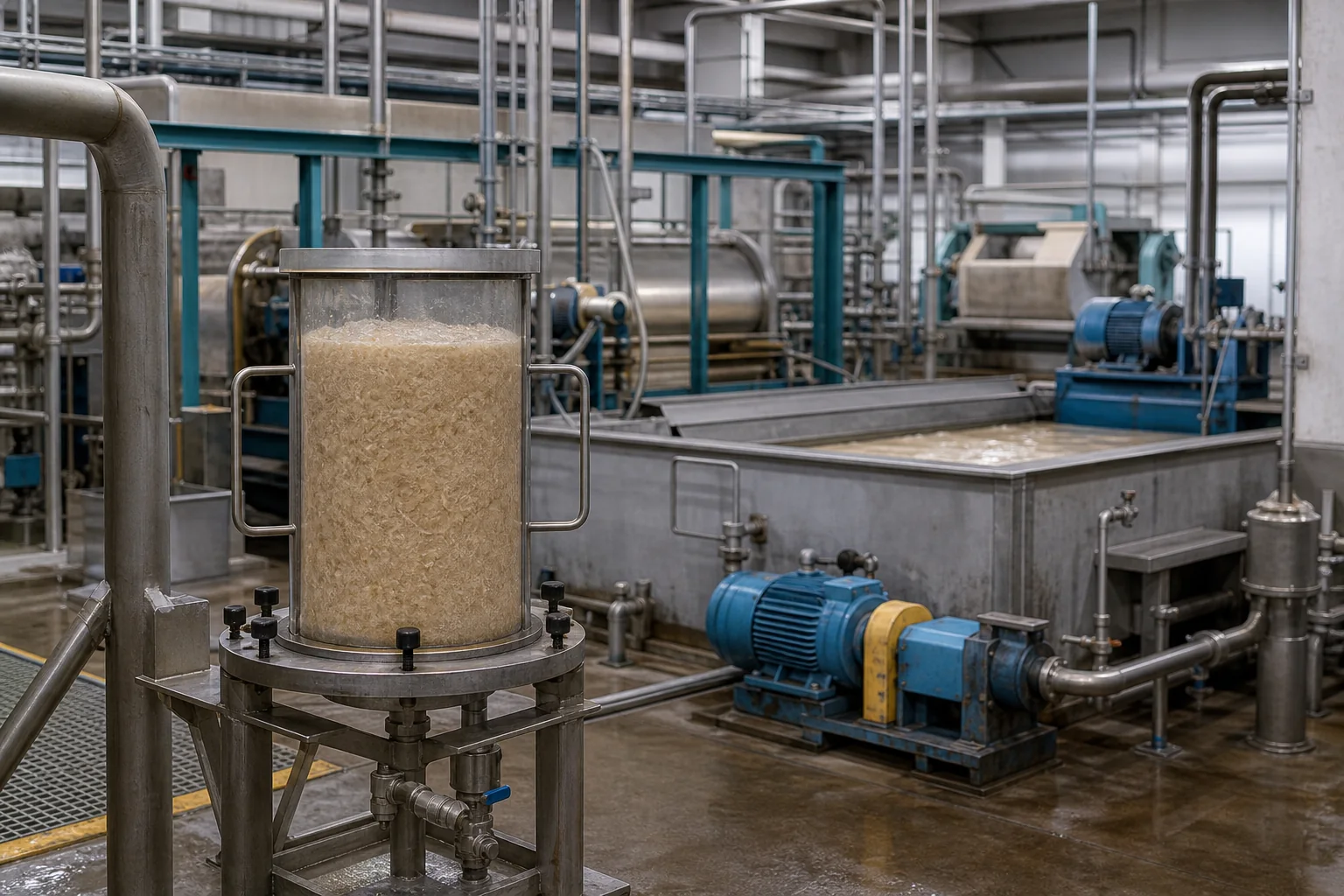
OCC furnish can change with recovered-paper source, fines, ash and contaminants. Include blending, refining, broke and the process-water condition in the purchase brief. A polymer selected on one convenient stock sample should not be described as approved for the full supply range without supporting evidence.
Identify the current machine limitation and the liner grade. State whether the request concerns retention and drainage, a separate dry-strength function or both in a defined program. Those functions can interact, but a high-molecular-weight retention product is not automatically a substitute for a qualified strength agent.
Preserve charge and additive context
Record conductivity, pH, the mill's charge measurements, fixative, starch, sizing and the existing retention system. Compare candidates using current representative furnish and confirmed active addition. Higher demand from dissolved or colloidal material should not be addressed by an unexplained permanent increase in retention-polymer feed.
Keep preparation, contact and machine shear comparable. Include the incumbent and a realistic difficult furnish condition. If a proposed product depends on a new charge-control step, evaluate the combined program explicitly rather than quoting only the lower consumption of its PAM component.
Connect drainage to liner quality
Read drainage and retention beside formation, press response, accepted moisture and the grade's conditioned strength or compression measurements. A faster-draining floc can still produce an uneven sheet. A favorable laboratory property at a changed basis weight is not proof that the purchased chemistry improved the original grade.
During machine confirmation, allow system carryover to clear and record production variation, breaks and off-grade material where relevant. Assess the dry-strength and retention effects separately enough to understand their costs. Do not credit an assumed speed or fibre reduction before the corresponding quality and production trial passes.
Order against the demonstrated OCC window
Provide the recovered-paper mix, normal and difficult measurements, current additive sequence and trial plan to the supplier. Request traceable candidates, preparation instructions and documents for each proposed code. State storage, quantity and destination separately from technical acceptance.
Keep the accepted furnish range and quality tests with routine purchase records. Re-screen after material source, closure or chemistry changes. The most defensible offer is a repeatable operating balance on actual OCC liner, not a generic promise of stronger recycled paper.
Connect qualification to the order
Keep the related operating qualification with the purchase record. Further checks include CPAM for a Closed-Water Paper Machine: Qualify the Conductivity Window and PAM and Starch Dry-Strength Programs: Compare the Combination Before Buying.
Request coded material through the papermaking PAM sample and quotation brief. Include paper grade, furnish, additive sequence, preparation limits, acceptance method, quantity and destination. Separate demonstrated results from conditions still awaiting a trial.