
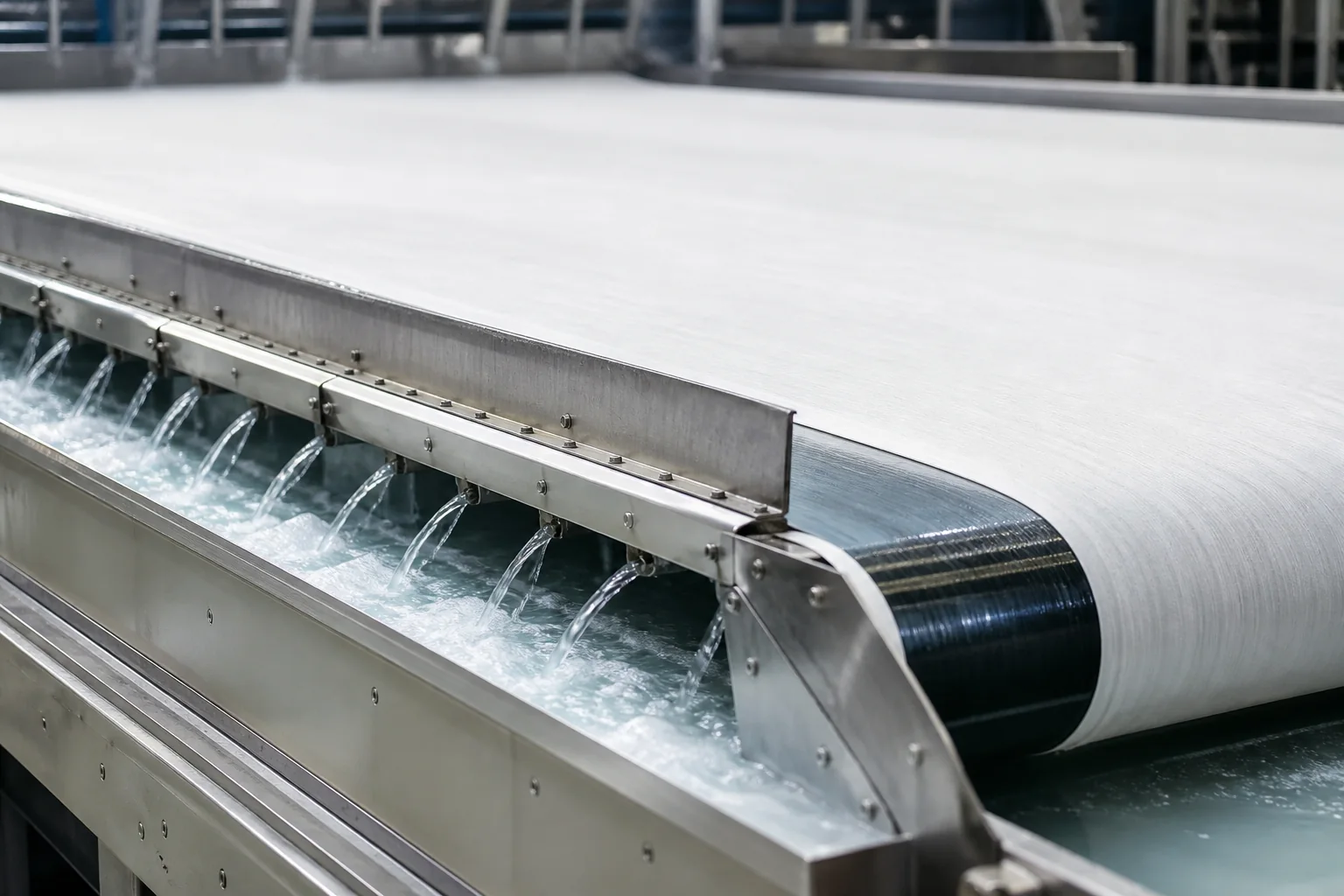
Define the proposed ash change separately from the polymer
A high-ash project can involve a new filler source, loading or paper target as well as a retention-aid change. Identify the PCC characteristics available from the filler supplier, the current ash range and the change being proposed. Keep the existing grade as a reference rather than comparing unrelated paper recipes.
Record fibre, refining, broke, starch, sizing and other retention components. The label PCC-compatible does not demonstrate fit with every precipitated-calcium-carbonate program. Ask the chemical supplier to explain the candidate selection against the actual furnish and intended machine sequence.
Screen under the relevant shear and sampling conditions
Prepare candidates consistently and compare confirmed active addition using the planned point and dilution. Include the incumbent and repeat relevant points. Retention assessed before representative approach-flow shear may favor a product whose aggregates do not produce the same useful response at the forming section.
Measure total and ash first-pass retention with matched stock and white-water sampling. Keep filler addition and system stabilization visible. A rising sheet ash during a transient period does not by itself quantify stable retention or establish a fair product-consumption comparison.
Make paper properties the commercial gate
Track drainage, formation, optical response and grade-critical strength at the actual ash and basis weight. A product should not be accepted solely because it retains more mineral if the sheet no longer meets customer requirements. Record the specific property method and relevant variability rather than choosing one favorable specimen.
Test any higher-ash condition as its own controlled step. Do not assign projected fibre savings or additional drying capacity before the mill verifies quality and operation. Material substitution and polymer optimization can create different gains and risks, which should remain separate in the trial record.
Keep approval with the demonstrated filler architecture
The RFQ should identify filler source, ash target, furnish, active basis, preparation and the measurements required. Request coded samples and enough material for repeated machine points. Clarify whether the proposal changes another retention or strength component and price that scope openly.
Approve the code with its accepted filler and chemistry window. Revisit qualification after a material PCC-source or program change instead of treating a successful high-ash run as unlimited compatibility. The supply description should preserve measured evidence, not an assumed universal PCC retention capability.
Connect qualification to the order
Keep the related operating qualification with the purchase record. Further checks include CPAM for GCC-Filled Fine Paper: Set Retention and Formation Purchase Gates and Dry-Strength PAM Bids: Compare Sheet Tests on One Conditioning and Basis-Weight Basis.
Request coded material through the papermaking PAM sample and quotation brief. Include paper grade, furnish, additive sequence, preparation limits, acceptance method, quantity and destination. Separate demonstrated results from conditions still awaiting a trial.