
Name the property that decides the purchase
A bid offering stronger paper is not testable without a named property and method. State tensile, burst, internal bond, compression or the relevant grade measurement, along with direction, basis weight and conditioning. Confirm whether the comparison uses an absolute property, an index or another mill-approved basis.
Do not compare values normalized differently or from unrelated paper grades. Keep the method and its applicable version with the request rather than accepting a supplier chart with missing conditions. Commercial ranking should follow a shared acceptance plan, not whichever laboratory reports the largest number.
Hold sheet-making variables visible
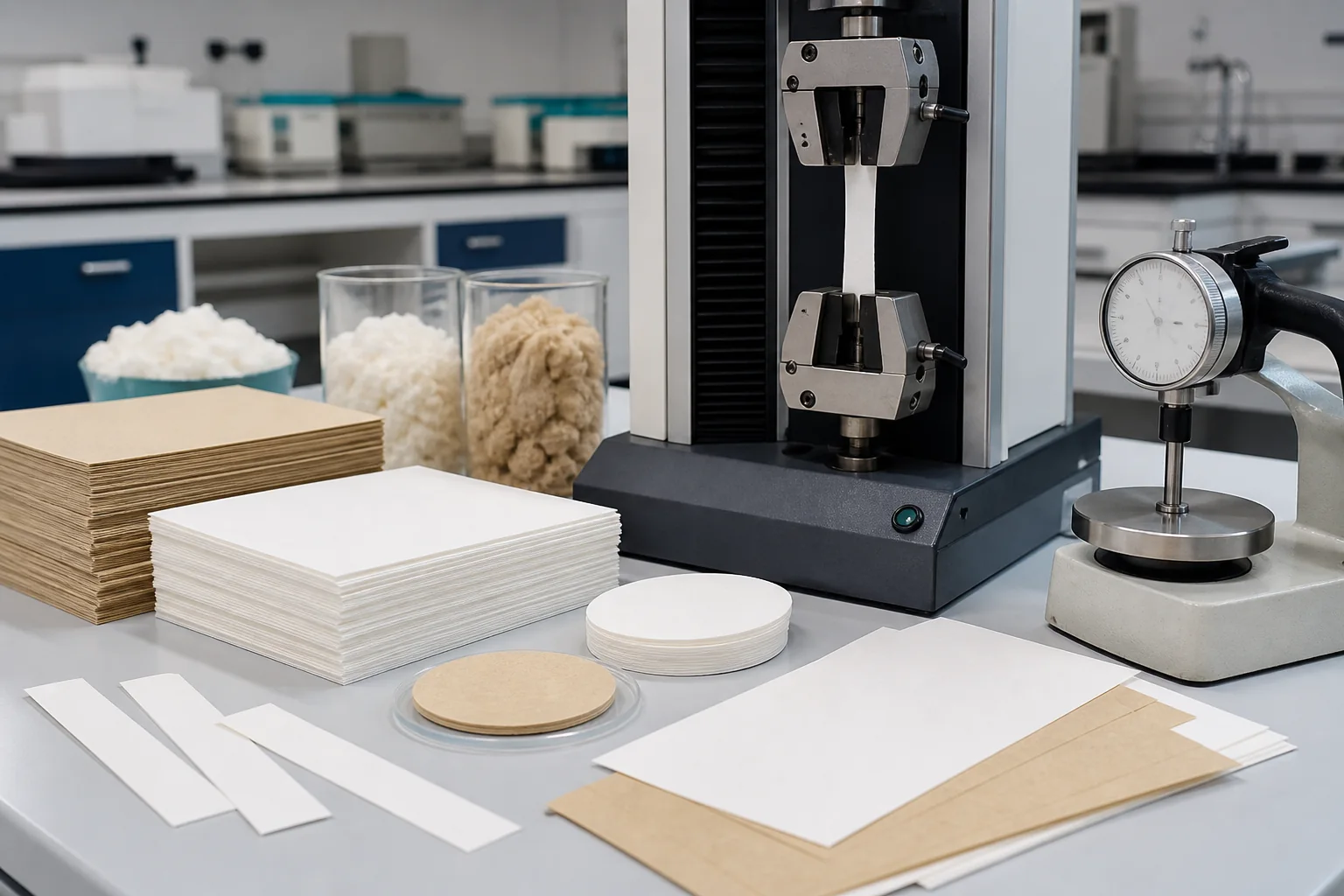
Use the same representative furnish and record refining, filler, starch, sizing and other treatments. Prepare blank, incumbent and coded candidate sheets at controlled additions. Record forming, pressing, drying and basis weight so a denser or heavier sheet does not silently receive credit as a polymer-strength effect.
Agree how sheets outside the preparation window are handled before results are selected. Preserve failed and repeated preparations where they explain uncertainty. A candidate should not gain an advantage through an undisclosed change in pressing or drying that the production machine cannot reproduce.
Compare variation rather than one selected result
Use the accepted atmosphere and conditioning period before testing. Report replicate count, average, spread and relevant outliers with the chosen method. Small differences can be inconclusive when specimen or preparation variation is comparable to the apparent improvement.
Read the target property with formation, drainage, retention and other required quality tests. A candidate must protect the complete paper grade. Do not translate a laboratory gain into an approved basis-weight reduction or machine-speed increase before the corresponding production and customer-quality requirements have been verified.
Preserve the comparison in the purchase file
Request the sample and production identity, current documents, preparation instructions and delivered scope. Attach the agreed sheet procedure and actual qualification results to the quotation. Identify which proposed conditions remain untested rather than filling gaps with assumptions about similar paper.
Advance a bounded machine trial using the same quality intent and a clear baseline. Release routine supply only after the authorized acceptance and first-delivery checks. A reproducible sheet-test package lets purchasing compare genuinely qualified offers without mistaking different laboratory methods for product superiority.
Connect qualification to the order
Keep the related operating qualification with the purchase record. Further checks include Cationic or Amphoteric PAM Dry-Strength Offers: Compare on the Actual Furnish and PAM for Multilayer Board Dry Strength: Specify the Ply and Test Location.
Request coded material through the papermaking PAM sample and quotation brief. Include paper grade, furnish, additive sequence, preparation limits, acceptance method, quantity and destination. Separate demonstrated results from conditions still awaiting a trial.