
Confirm the identity rather than choose by ionic label
A cationic or amphoteric description is not a complete dry-strength specification. Request the proposed commercial code, product form, active or assay basis and preparation guidance. Ask which furnish and paper property support the recommendation; do not assume one ionic family always provides the greater benefit.
Keep the intended strength duty distinct from a retention aid that may also change sheet properties. Record fibre, refining, filler, broke, starch, sizing, conductivity and pH. The comparison should test a reasoned shortlist in the actual wet-end environment instead of ranking isolated solution viscosity.
Control sheet preparation and dose basis
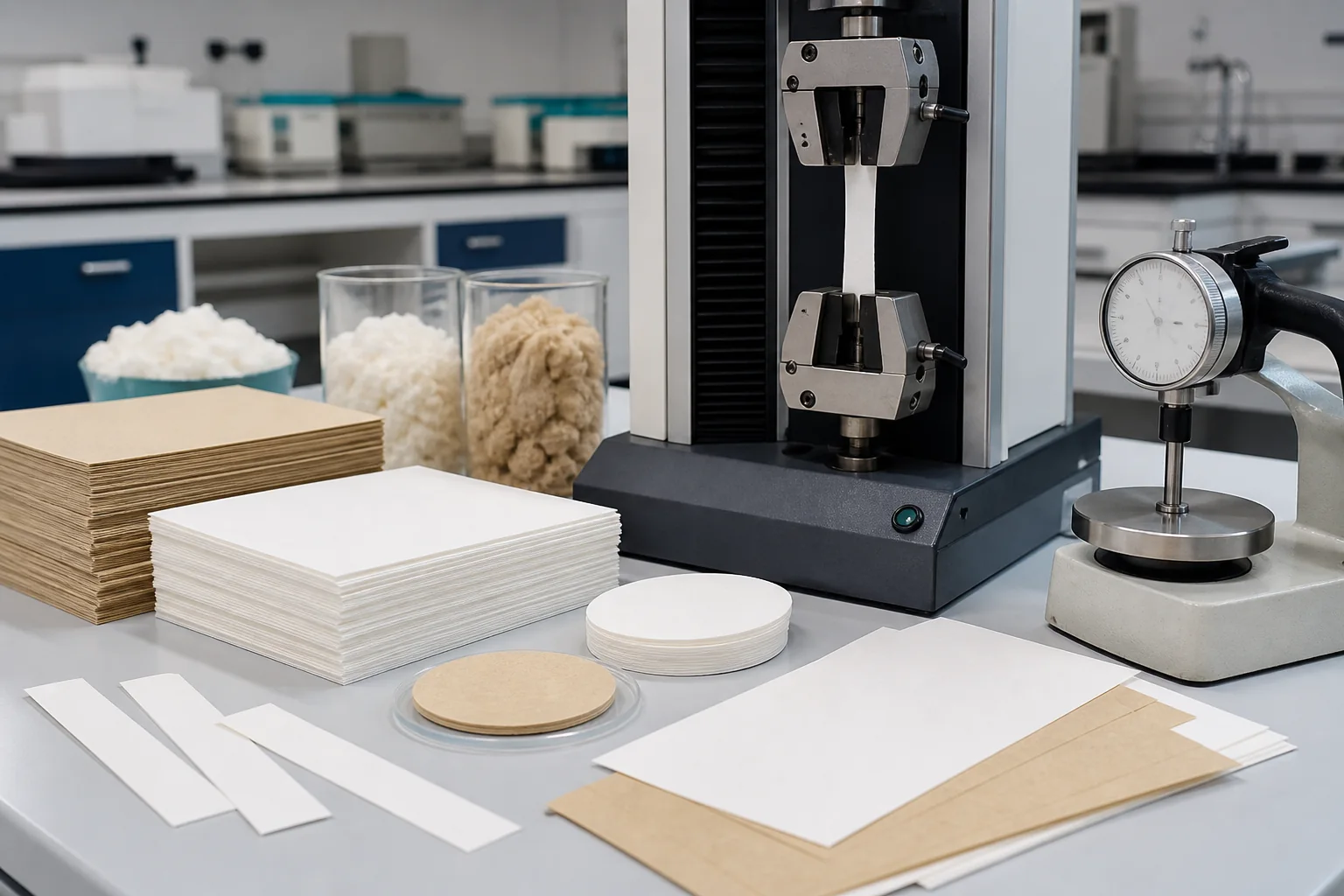
Use representative stock, blank and incumbent references, and several agreed active additions. Keep mixing, contact, shear and solution age consistent. Form, press and dry sheets under the selected method, recording basis weight and any preparation variation that could imitate a chemical gain.
If a candidate needs a different preparation route or partner chemical, label that condition explicitly. A specially optimized laboratory method must be checked against what the machine can reproduce. Confirm availability and documents for each offered identity before treating it as a routine procurement option.
Judge conditioned properties and wet-end response
Test the defined tensile, burst, internal-bond, compression or other required property with appropriate conditioning and replicates. Preserve average, variation, direction and basis-weight context. One favorable strip is not a reliable basis for choosing a supplier or chemical family.
Include drainage, retention, formation and the grade's other quality limits. A strength gain that produces unacceptable formation or preparation difficulty is not an approved replacement. Machine confirmation should read the paper result and operating consequences together rather than assuming the laboratory ranking is final.
Request a code-specific commercial comparison
Quote delivered price, documented concentration basis, package and qualified addition for each accepted candidate. Keep support, equipment changes and other chemical costs separate. Do not assign hypothetical fibre savings or basis-weight reductions before a controlled quality trial supports them.
Link the selected sample and machine evidence to production supply and first-lot checks. Define review after material furnish, refining, filler or additive changes. The purchase conclusion should name the tested grade and operating window, not declare one broad PAM family universally superior.
Connect qualification to the order
Keep the related operating qualification with the purchase record. Further checks include Dry-Strength PAM Bids: Compare Sheet Tests on One Conditioning and Basis-Weight Basis and PAM and Starch Dry-Strength Programs: Compare the Combination Before Buying.
Request coded material through the papermaking PAM sample and quotation brief. Include paper grade, furnish, additive sequence, preparation limits, acceptance method, quantity and destination. Separate demonstrated results from conditions still awaiting a trial.