
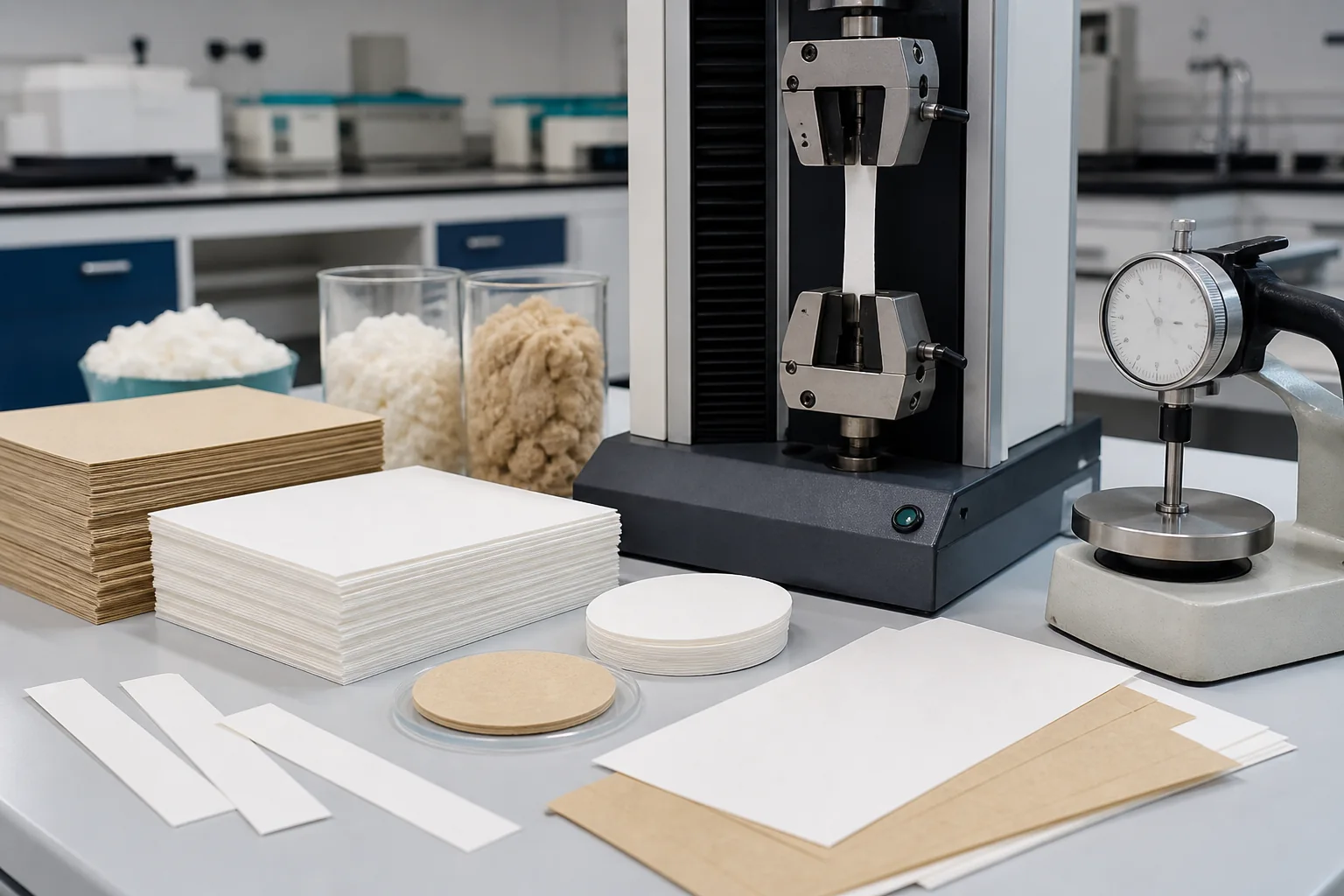
Define the paper property
Name tensile, burst, internal bond, compression, ply bond or another conditioned dry property and specify machine direction, cross direction or basis-weight context.
A general request for stronger paper does not define the polymer function or the acceptance method.
Use representative furnish
Prepare handsheets with the actual fiber blend, refining, filler, starch, broke, conductivity, pH and interfering additives.
Dry-strength response depends on adsorption and fiber bonding; clean laboratory pulp can overstate performance on recycled or highly filled furnish.
Screen ionic and molecular profile
Compare plausible cationic or amphoteric profiles at equal active addition and keep preparation, contact time and shear consistent.
Molecular profile can affect both sheet strength and wet-end flocculation. A strength gain does not justify poor formation or drainage.
Condition and test correctly
Form, press, dry and condition sheets by the agreed method before tensile, burst, internal bond or compression testing.
Report replicate averages and variability. One favorable strip cannot support a grade decision.
Review the machine consequence
Track retention, drainage, white-water load, formation, press solids and deposit tendency during a controlled trial.
The chosen product must fit the entire paper-machine balance, not only the laboratory strength result.
Compare delivered value
Normalize product concentration or active basis, required addition, paper-property benefit, machine effects, packaging and delivered cost.
Link commercial supply to the approved sample and revalidate after meaningful furnish, refining, filler or chemistry changes.