
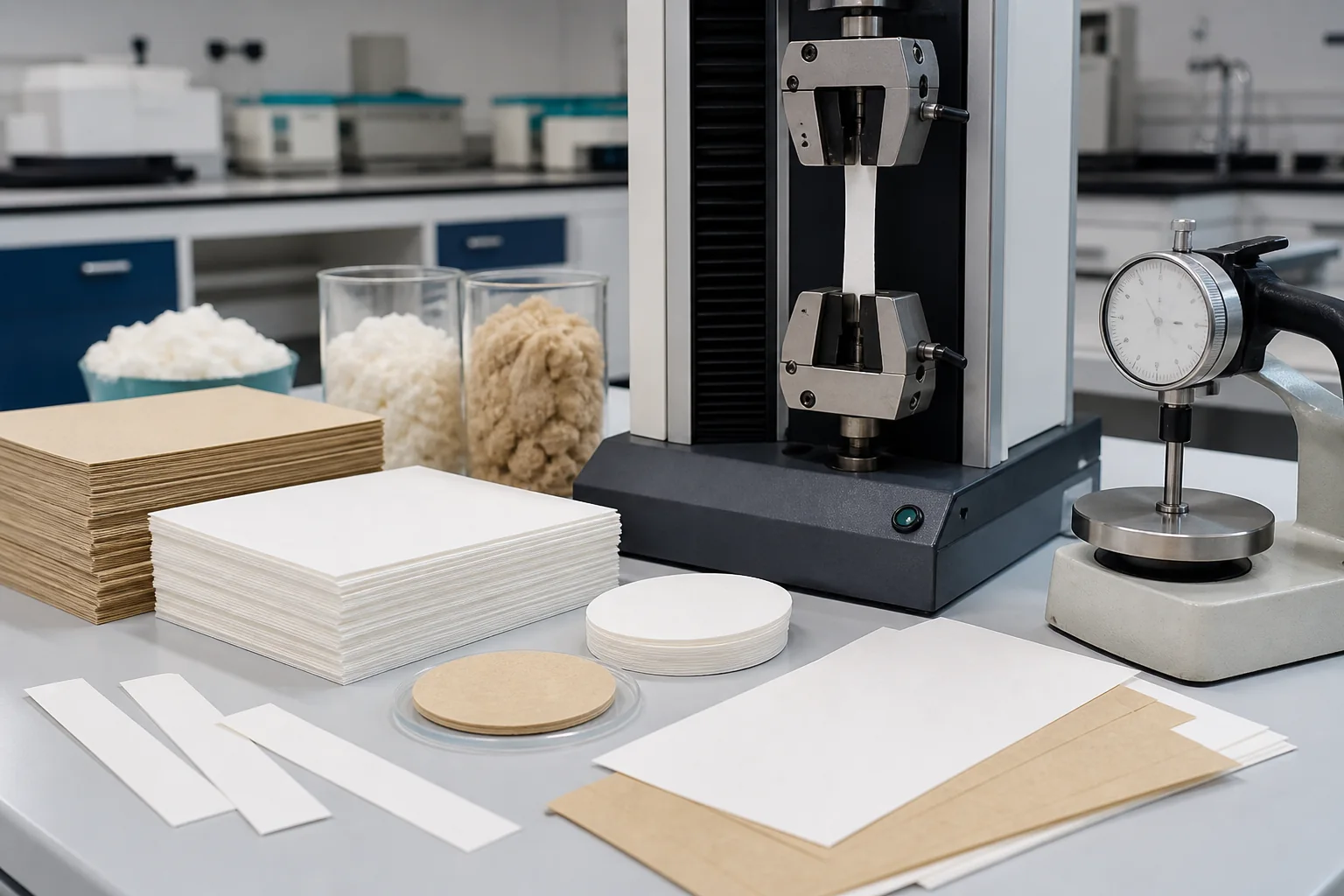
Name the target property
Specify tensile, burst, internal bond, compression or another grade test and its conditioning method.
Include direction, basis weight and acceptance range.
Prepare representative stock
Use the real fiber blend, refining, filler, broke, conductivity, pH and wet-end additives.
Clean pulp can overstate polymer adsorption and strength response.
Create controlled additions
Compare blank, incumbent and coded candidates at several equal active additions.
Keep solution age, mixing, contact and shear consistent.
Form equivalent sheets
Control stock mass, forming, couching, pressing, drying and basis weight.
Reject sheets outside the agreed preparation window before strength comparison.
Condition before testing
Condition sheets under the accepted laboratory atmosphere and test after the specified time.
Moisture variation can hide or imitate a chemical effect.
Use replicates and variation
Report average, spread and any outliers with the test direction and specimen count.
One favorable specimen is not a defensible result.
Check non-strength effects
Measure drainage, retention, formation, density and other grade-critical properties.
A strength gain must not create a paper-machine or quality penalty.
Translate to machine trial
Define starting addition, sampling, stabilization, stop conditions and supply identity.
Confirm the laboratory ranking on the actual machine before routine use.
Machine-trial interpretation and release record
A useful paper-machine decision record connects the product question to a defined furnish and grade. Record fiber mix, fines, filler, broke, pH, conductivity, temperature, charge demand and the complete wet-end additive sequence. Identify the current limitation and the measurement that will decide the trial. This context prevents a visually attractive laboratory result from being mistaken for a production-ready recommendation.
Compare a blank, the current program and coded candidates at equal active addition. Keep stock consistency, dilution water, polymer aging, addition order, mixing energy and elapsed time consistent. Measure the relevant combination of total and ash retention, drainage, white-water solids, formation and sheet properties. Repetition matters when furnish variability is large, and an apparent improvement should remain visible against the reference before scale-up.
The machine review should trace polymer from make-down to the headbox or selected sheet-strength addition point. Note feeder calibration, stock concentration, aging, dilution, injection hardware, contact time, fan-pump and screen shear. A chemistry that works only under gentle beaker mixing may not survive the approach-flow path. Conversely, poor wetting or a blocked dosing line can make a suitable grade appear ineffective.
Approve an operating window, not a universal dose. State the furnish, paper grade, test methods and acceptable balance among retention, drainage, formation, runnability and finished-paper quality. Link the approved sample code to its quotation, COA, SDS, packaging and receiving checks. Revalidate after meaningful changes in furnish, filler, wet-end chemistry, addition point, machine speed or supplied product identity.
Plan the machine trial before the sample arrives. Define baseline duration, sampling points, laboratory methods, operator observations, stabilization time and stop conditions. Hold other additives steady when practical, and document every unavoidable process change. Review white water, press behavior, deposits, broke and finished-paper tests beside the primary metric. A trial succeeds only when the total process and quality balance remains acceptable, not when one retention or drainage reading briefly reaches a peak.
Close the work with a release sheet that production, quality and purchasing can all use. Include the accepted product code, active addition range, preparation recipe, addition point, monitored signals and corrective actions. Add the representative furnish window and approval date. This lets later lots be checked against the same evidence and prevents a result from being separated from the conditions that created it.