
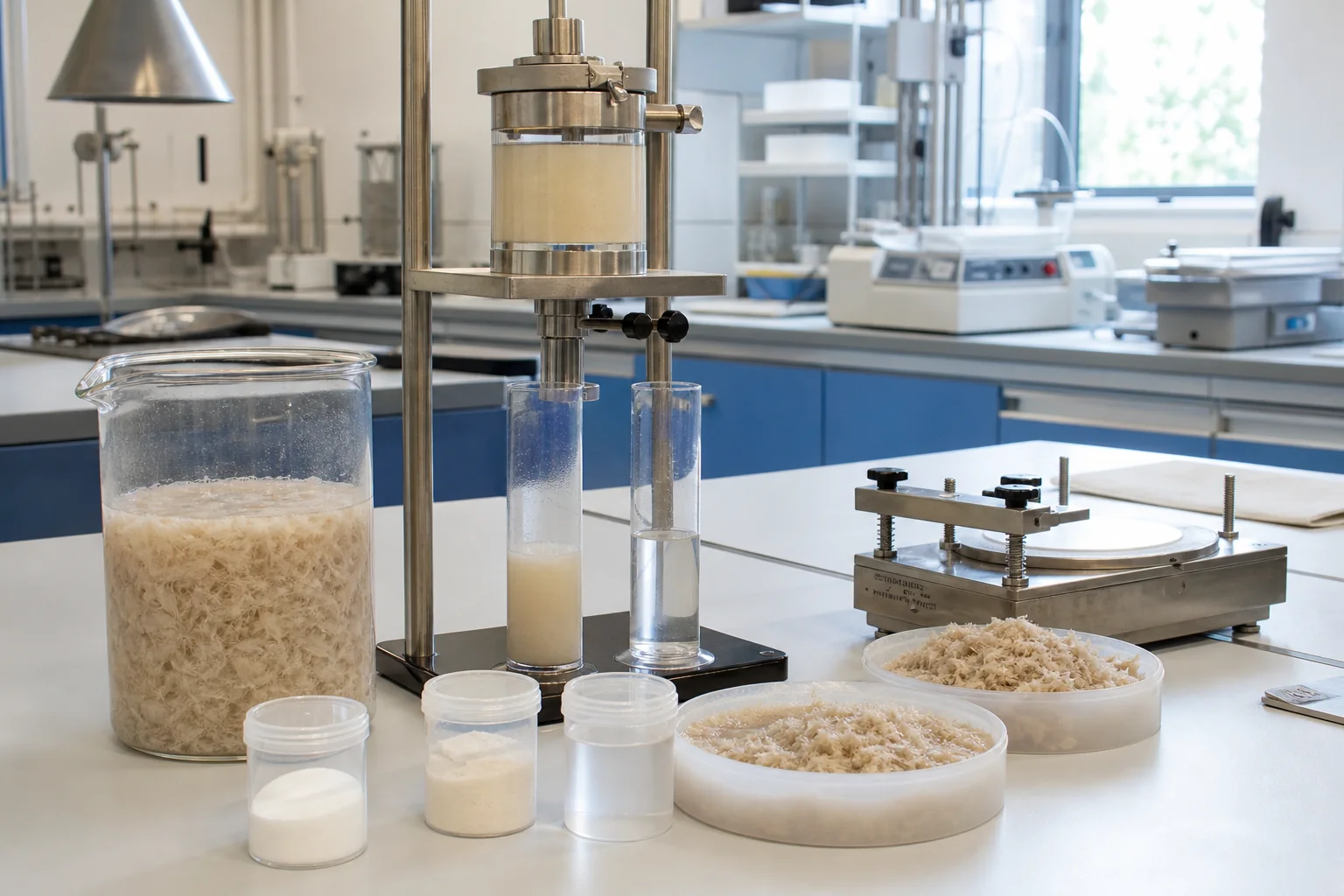
Preserve a credible incumbent condition
A replacement decision needs a current reference on the intended paper grade. Record furnish, wet-end sequence, active addition, preparation, retention, drainage, formation and quality. If the incumbent is failing, check preparation and dosing hardware before assuming another supplier will solve the underlying problem.
Screen both products on the same stock and common documented basis. Ask the alternative supplier to identify any different preparation, partner chemical or addition route. A lower price does not justify comparing a specially optimized candidate with an unrepresentative incumbent condition.
Plan product and recirculating carryover
Identify preparation-tank turnover, line contents, injection points and the system delay before representative samples can be taken. Obtain appropriate compatibility guidance before mixing products or solutions. Mark transition periods and keep them separate from accepted steady-state results.
Hold the grade and other additives stable where possible and record unavoidable process changes. A sequential comparison can favor whichever candidate receives easier furnish. Budget enough time and material for a return-to-reference or repeated preferred condition where the trial design permits it.
Use matched measurements over valid periods
Pair actual product usage with production and laboratory samples from the corresponding interval. Read retention or strength with formation, other paper properties and machine-side observations. A short favorable reading or an isolated dry-strength strip should not determine routine supply approval.
Keep other chemical adjustments visible and distinguish a direct replacement from a redesigned program. Compare total qualified consumption and measured consequences, leaving unverified benefits unpriced. The responsible mill teams should retain authority for quality gates and operating changes.
Approve the production alternative in stages
Link the accepted sample to the commercial code, documents, package and first-delivery checks. Preserve the incumbent supply option until the agreed production confirmation has passed. An alternative described as equivalent still needs its own traceable acceptance rather than relying on the word alone.
Keep the demonstrated grade, furnish and sequence window in the purchase description. Define notification and re-screen requirements for subsequent product or process changes. A controlled supplier switch is complete when delivered material reproduces the accepted result, not merely when the lower quotation is signed.
Connect qualification to the order
Keep the related operating qualification with the purchase record. Further checks include How Much PAM Should a Paper-Machine Trial Order Include? and Papermaking PAM First-Lot Acceptance: Match the Shipment to the Trial.
Request coded material through the papermaking PAM sample and quotation brief. Include paper grade, furnish, additive sequence, preparation limits, acceptance method, quantity and destination. Separate demonstrated results from conditions still awaiting a trial.