
Define the grade failure
Identify the specific tensile, burst, internal bond, compression or ply-bond limitation and how it changes with basis weight, moisture and direction.
Use the customer's test method and acceptance limit as the trial endpoint.
Separate chemistry from fiber work
Record fiber mix, refining energy, drainage, filler, starch, sizing, broke and current strength agent.
A polymer trial should not conceal a refining, furnish or sheet-consolidation problem.
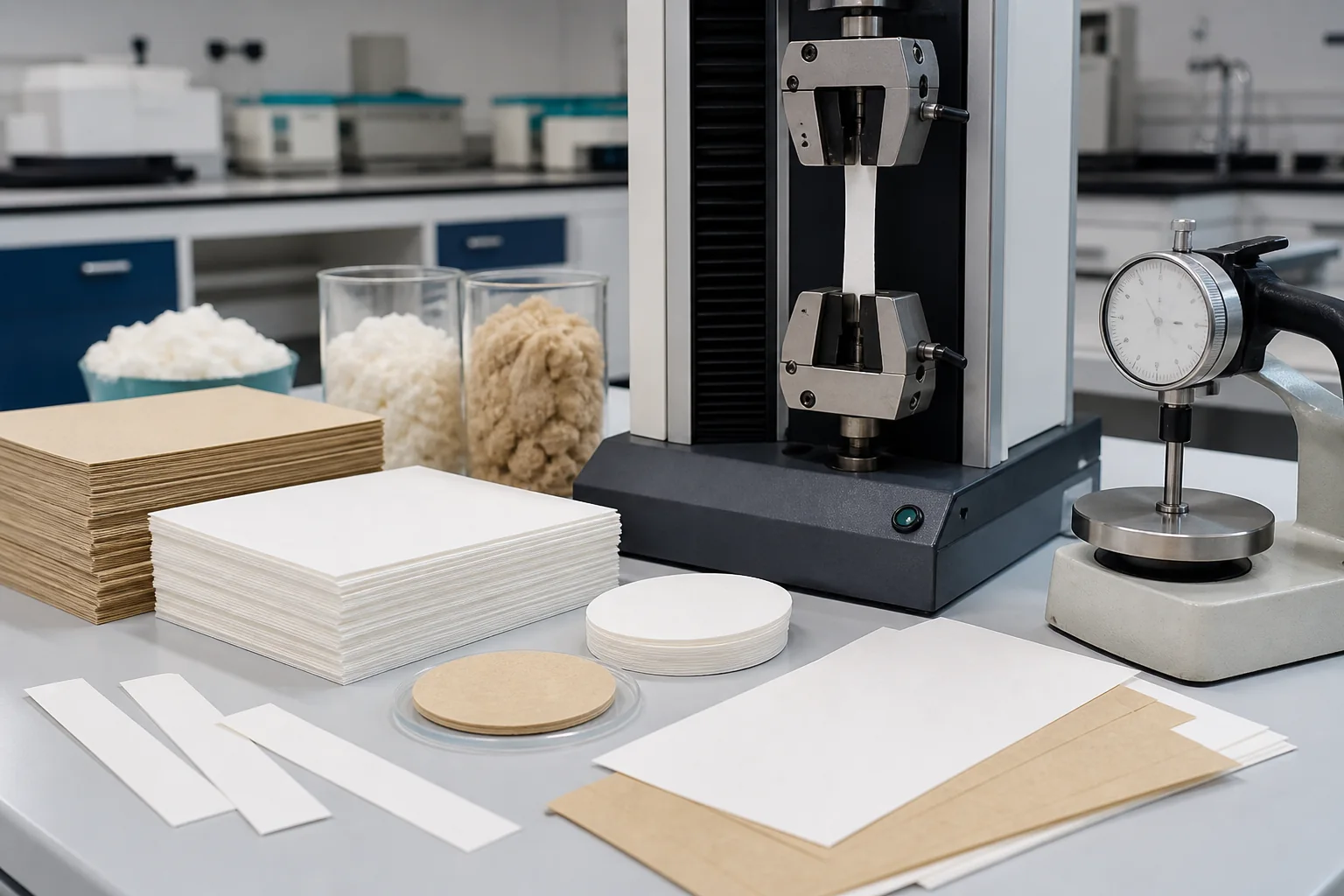
Prepare a controlled handsheet matrix
Use representative stock and compare blank, incumbent and coded candidates at several equal active additions.
Keep forming, pressing, drying and conditioning consistent across every sheet.
Measure strength and wet-end effects
Test the target property with replicates and also observe drainage, formation, retention and sheet density.
A higher average with unacceptable variation or machine-side loss is not an approved result.
Scale up in bounded steps
Hold furnish and machine conditions stable, introduce the candidate gradually and sample after the system reaches a new response.
Track paper property, formation, press solids, breaks and chemical consumption together.
Set change-control triggers
Keep the approved polymer identity and define retesting after meaningful fiber, filler, refining, wet-end charge, basis-weight or product changes.
Treat the final recommendation as an operating window supported by the recorded furnish and test conditions.